HKC has shown what it says is the first gaming display with a native 800Hz refresh rate in the world. Although a 750Hz prototype was originally displayed by the business at CES 2025 under the Koorui G7 brand, the recently unveiled 800Hz variant seems to be an independent or upgraded device. Whether the final version has the same model number and branding has not been confirmed by HKC.
The new monitor integrates many cutting-edge technology and has a 24.5-inch Full HD display. Powered by a-Si HyperSilicon high-frequency drive technology, it makes use of HKC’s proprietary FSA VA panel. Additionally, it has a cadmium-free QDEF quantum dot enhancement layer and 1152-zone Mini LED illumination. The display may provide exceptional motion clarity without sacrificing color performance thanks to this combination.
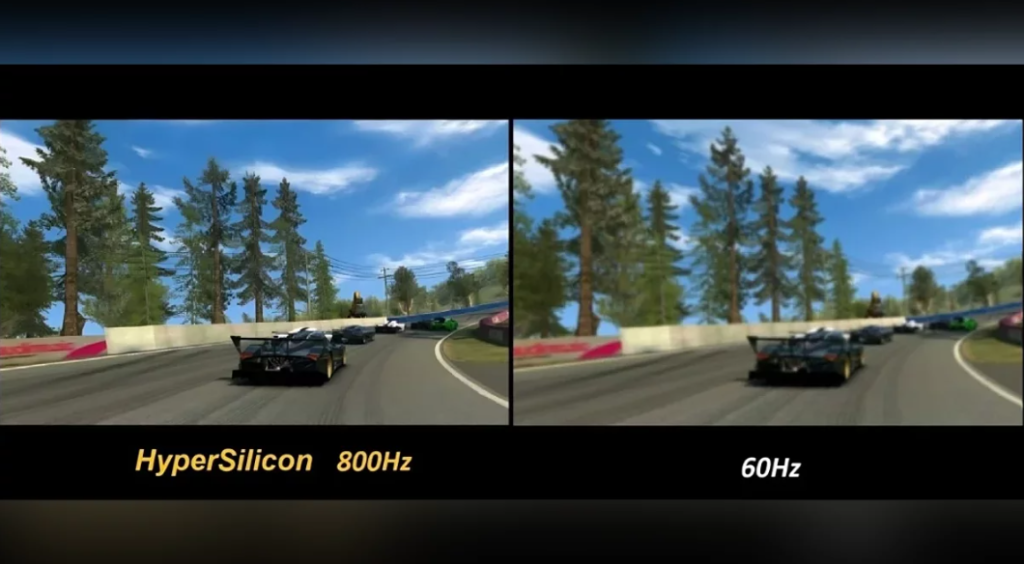
In terms of specifications, it has a 4000:1 contrast ratio, a native 800Hz refresh rate with a VRR range of 48Hz to 800Hz, a 0.5ms GtG response time, and a peak brightness of 1200 nits. With 95% DCI-P3 and 99% Adobe RGB color accuracy, ΔE < 1.5 color accuracy, native 10-bit color depth, and compatibility for up to 12-bit rendering, the panel provides broad color coverage.
The monitor has VESA DisplayHDR 1000 certification and supports Nvidia G-Sync and AMD FreeSync Premium Pro for customizable refresh rates. It also features a dynamic power-saving feature that lowers the refresh rate when there is static content in order to conserve electricity.
HKC is marketing the 800Hz display as a top-tier esport tool for gamers that want the best clarity and responsiveness in fast-paced games like Counter-Strike 2 and Valorant. Unlike the previous 750Hz Koorui G7, which used a TN panel, this model features a VA screen for more contrast and wider color coverage to deliver both speed and increased image quality.
In any case, the revelation places the business ahead of competitors in the market for high-refresh displays, since companies like as Samsung, MSI, and AOC keep increasing the frequency of their own product lines above 500Hz.