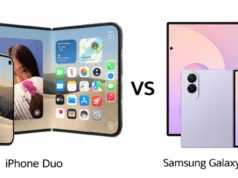
After years of rumors, leaks, and patents, Apple’s long-anticipated move into the foldable smartphone market seems closer than ever. While Apple itself has stayed quiet, increasing reports from analysts, insiders, and supply chain sources are painting a clearer picture of what could be the company’s most innovative iPhone to date. 2026 is now anticipated to see the release of a foldable iPhone. Here’s a rundown of all the details we’ve gathered so far.
1. A New Form Factor That’s Been in the Works for Years
Apple has reportedly been exploring foldable technology for over a decade. The first signs appeared in flexible display patents as early as 2014. Rather than rushing to market, Apple has taken its time, observing how competitors approach foldables. The company is now expected to unveil its first foldable iPhone in the second half of 2026, and recent updates indicate the device has entered the New Product Introduction (NPI) stage at Foxconn. Mass production could potentially begin by the end of the third quarter of 2025.
Both Mark Gurman from Bloomberg and renowned analyst Ming-Chi Kuo believe the foldable iPhone will feature a book-style design, much like Samsung’s Galaxy Z Fold lineup. When fully opened, it’s expected to offer a 7.8-inch OLED screen with a 4:3 aspect ratio, essentially transforming the phone into something like a pocket-sized iPad mini.
2. A Foldable Display Without the Usual Crease?
One of the more exciting claims is that Apple might deliver a foldable display with no visible crease. This would be a significant achievement, considering other brands have struggled with this design flaw. The innovation reportedly comes from a metal support plate beneath the screen that distributes pressure more evenly during folding, helping to avoid creasing.
Apple won’t be making this display on its own. Instead, it has partnered with Samsung Display, which is reportedly preparing a dedicated production line for Apple at its A3 facility in South Korea. Samsung is expected to supply all of the 7-inch foldable OLED panels for the first-generation foldable iPhone, utilizing its extensive experience in foldable screen development.
3. Hardware That’s Thin, Durable, and Touch ID-Friendly
The foldable iPhone is shaping up to be a sleek piece of hardware. It might be as thin as 4.5mm when open and between 9mm and 9.5mm when folded, slimmer than many of its early competitors. The body could be built from titanium, with the hinge possibly incorporating liquid metal for added durability.
Interestingly, Apple may skip Face ID for this model. Instead, Touch ID could make a comeback, integrated into the power button—similar to what we’ve seen on some iPads. The camera system is expected to include dual rear lenses, possibly featuring 48MP sensors, while a single front camera might be housed under the internal screen.
4. A Strategic Display Partnership
It’s not typical for Apple to outsource critical components, but in this case, Samsung’s folding screen technology seems to have met Apple’s high standards. Reports suggest Apple prioritized reliability and production stability over full customization. This also benefits Samsung’s hinge supplier, Fine M-Tec, which may provide over 80 percent of the metal support plates for the foldable iPhone.
Fine M-Tec is reportedly using laser drilling to create microscopic patterns that relieve stress in the hinge area, helping to minimize wear and tear. These intricate support plates could cost between $30 and $35 each, highlighting the engineering complexity of the device.
5. Expected Price and Availability
UBS analysts estimate the price of the foldable iPhone will range between $1,800 and $2,000 in the US, making it the most expensive iPhone yet. This pricing places it in direct competition with Samsung’s Galaxy Z Fold 7 and Vivo’s X Fold 5.
Apple is believed to be aiming for 10 to 15 million units shipped in the first year. However, actual sales may be lower due to production challenges and the need to reserve some units for repairs and replacements.
6. What This Means for the Foldable Market
Apple’s entrance into the foldable segment comes at a time when the market has hit a bit of a slowdown. Although brands like Samsung, Huawei, and Motorola have made significant strides, foldables still represent a small slice of the global smartphone industry. Many consumers remain hesitant due to concerns around durability, high prices, and practicality.
But Apple has a history of reshaping markets. If the foldable iPhone delivers on its promise a sleek, crease-free, titanium-built device it could be the push needed to take foldables mainstream. If all goes according to plan, 2026 might be the year foldable phones finally gain wide acceptance.
(source)